The Memory of Deep Time
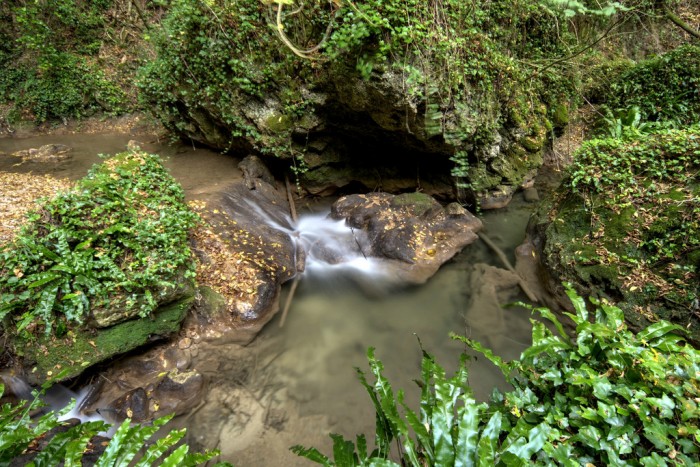
FOLIGNO – The Menotre River flows through the heart of Umbria's woodlands. It's a modest waterway, nearly forgotten by many, yet it safeguards an extraordinary testament: the chronicle of deep time itself.
Archives of the Past
The rock formations exposed along this narrow valley function as archives of Earth's distant past. Geologists, interpreting these stone chronicles, have reconstructed our planet's ancient story, tracing the deepest roots of our history. In this Umbrian location, as in few other places on Earth, these roots are written with remarkable clarity across just a few kilometers.
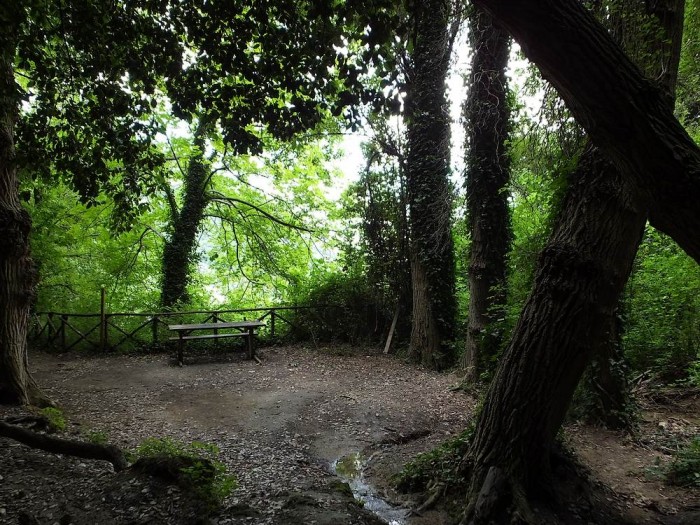
This reading has revealed what Earth looked like millions of years ago, and through which processes the landscape—which seems so unchanging and obvious today—was actually formed.
According to Walter Alvarez ("The Mountains of Saint Francis," Fazi Publishing, 2010), winner of the Vetlesen Prize for earth sciences, the discovery of deep time is perhaps geology's greatest contribution to human thought. Viewing it from a historical perspective, this naturalistic concept of time opens vast panoramas: it allows us to recognize astonishing events that changed the course of our planet's history and which, through the most improbable pathways, led to what we are today and the kind of world we inhabit.
Those who grasp the idea of rocks as recorders of Earth's ancient history experience a dizzying and exciting expansion of temporal understanding. John Lewis Gaddis, in his essay "The Landscape of History" (Oxford University Press, 2002), suggests that acquiring this awareness is like taking off in an airplane, rapidly gaining altitude and suddenly seeing our restricted world extend into a vast and complex landscape: the landscape of history.
Small Waterfalls and Boundless Horizons
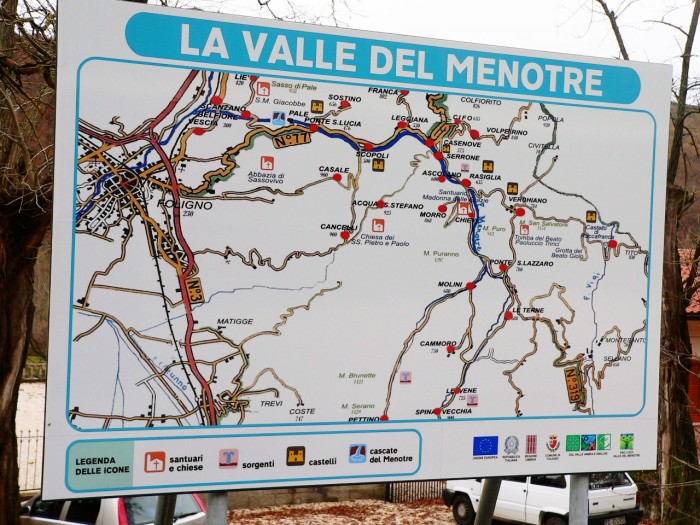
The Menotre valley is narrow and lush. It's not easy to spot. You can only identify it by carefully observing the heights behind Foligno. The scenery northeast of the city, dominated by the massive mountain structures of Sasso di Pale and Serrone, outlines a harsh V-shaped profile. This is the entrance to the gorge, which penetrates the ridge for about ten kilometers, rising from 250 to over 800 meters.
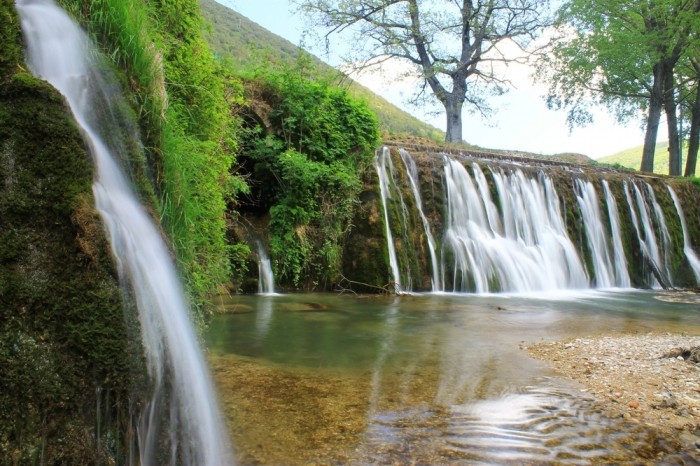
The river overcomes a series of steep drops in a sequence of scenic leaps: the six waterfalls of Altolina. Higher up, beyond the village of Pale and toward the source, at the Fauvella rock, it collects waters from several small streams that feed it until its confluence with the Topino River at the gates of Foligno.
The water, flowing through a limestone bed, has deeply carved the walls of the slopes, bringing to light the mountain's inner core: the rocks that preserve the memory of deep time. It's here that the stones can be read. To interpret them, one must adjust the human idea of passing time to the terrestrial concept of becoming, so that the past is no longer made of tens and hundreds of years, but thousands and millions of centuries.
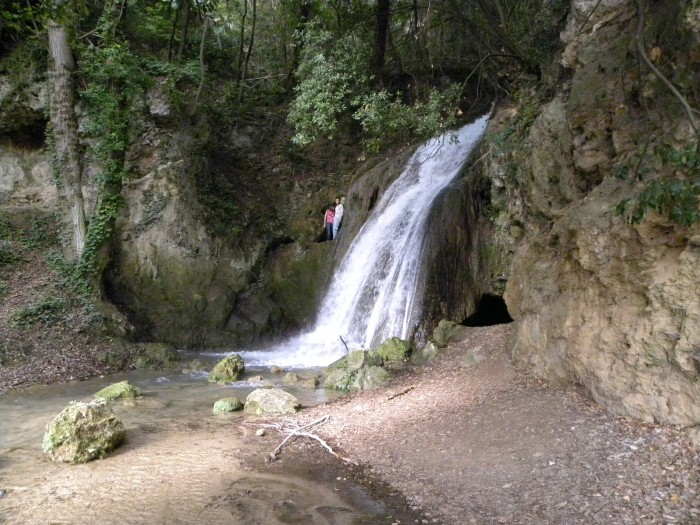
Bringing the mind to make this dizzying leap is difficult, but possible. And the Menotre, hidden among the branches of poplars and tall cypresses, far from the frenetic pace of modern life, is the ideal path to prepare thought to accept and understand this concept. Once achieved, the horizon becomes boundless. Immense historical scenarios open to view, showing the vast and articulated landscape of world construction. Thus, following the gorge's path, the river's flanks reveal how dynamic the seemingly static and unchangeable panorama is, and through which processes it came to assume forms that appear immutable only because they change at imperceptible rates.
Arid coastal lands, flat desert expanses and ephemeral shallow lakes that evaporate leaving inhospitable blankets of salt crusts. Then lagoons, low reefs and long tropical beaches, marked for millions of years by the coming and going of tides. And later open seas and oceanic abysses, so distant from emerged lands as to no longer retain even their memory. Finally, in the distance, land again, returning to pay its tribute to the sea: the sharp crests of a young mountain chain, and the floods of rivers that spread into the water the mud and gravel eroded from its slopes.
Humanity and the River: A Millennial Bond
And while the environments that founded today's Umbria flow through the stone pages opened by the river, alongside them unfolds the human story that has left admirable traces of its passage along the Menotre. From ancient castellieri—pre-Roman settlements of Italic peoples—to the vestiges of imperial Rome's civitas and communication routes, up to the medieval villages built between the 11th and 12th centuries. And the aqueducts, paper mills, and water mills. Every artifact contributes to tracing the chronicle of the millennial bond between humanity and the river.
On the winding road that climbs to the Colfiorito pass, many small historic settlements, such as Verchiano, Lié, Casale, Scopoli, Leggiana, and Rasiglia, dot the woods with their castles, fortresses and hermitages, rising from the caves that gave refuge to the first inhabitants.
Frontier outposts between the sunny Umbrian valley and the absolute green of the looming Apennines. Places where the memory of deep time and the testimonies of civilization intertwine together, along the river's course.


